
Pastor David Neuen – Lead Pastor, dneuen@pumc.org

Inspired by his travels to the Holy Land, Saint Francis of Assisi created the first live nativity scene in 1223 to help children understand the true meaning of Christmas. The friar wanted to portray the birth of the holy child in a way that people might remember Christ’s humility and poverty. He showed the onlookers that the holy can be found outside the physical structure of the church. Crowds gathered holding candles and torches at a cliff side in Greccio, a small town 50 miles north of Rome, to see the reenactment of the manger with Jesus, Mary and Joseph alongside live animals. The story goes that the onlookers experienced a miracle, seeing a real infant appear in the empty manger with St. Francis taking the beautiful child into his arms, holding him in a loving embrace.
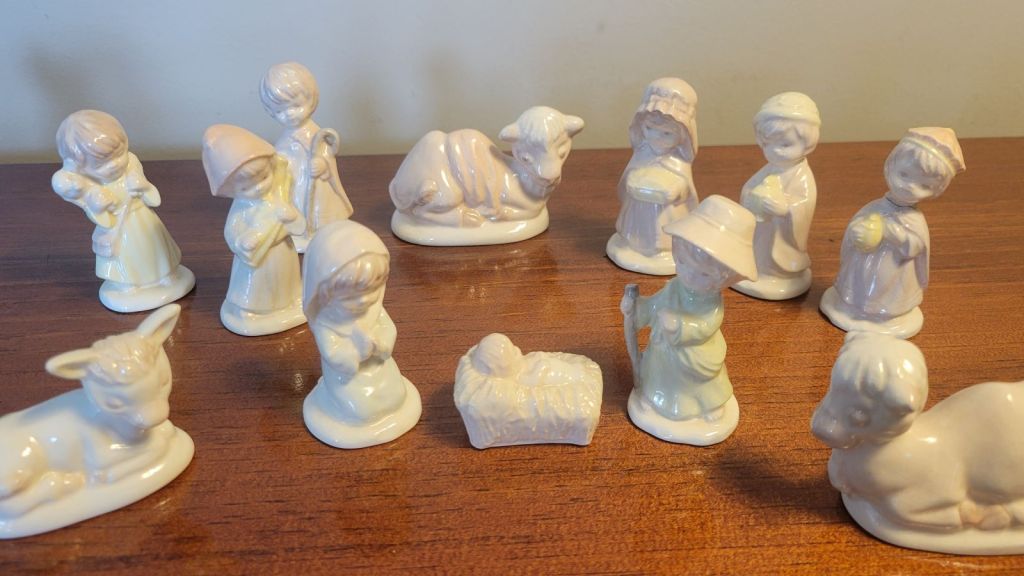
In the late 15th century, brothers Pietro and Giovanni Alamanno began creating life-size sculptures of religious figures for display in local chapels. This included creating the scene of Christ’s birth. A Christmas creche craze had begun. Soon, small-scale nativity scenes became a popular collector’s item among the wealthy. In 1567, the duchess of a small town in Italy commissioned more than 100 crèche figurines for display in her home, including camels carrying treasure, dogs, an elephant, and a giraffe.
Emerging in the 16th century, the Protestant branch of the church took issue with nativity scenes, rejecting and destroying them as materialistic distractions. Figurines of baby Jesus were called out as idolatrous icons distracting from a personal relationship with the living Christ. But hostility towards the nativity scene softened. Some Protestant Christians settling in the Americas brought nativity figures with them as domestic decorations. When Christmas became celebrated as a national US holiday in the mid-19th century, the popularity of nativity sets grew tremendously.
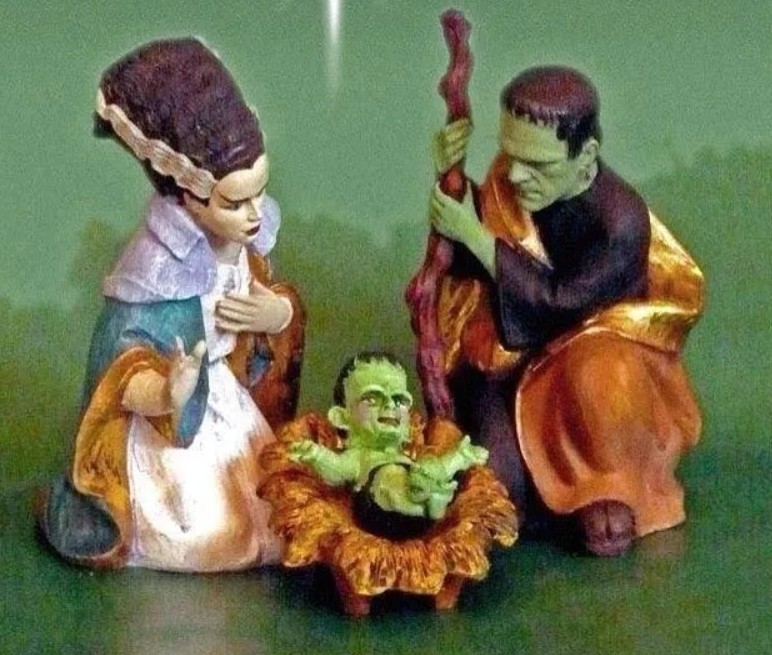
Today, artists have pushed the boundaries in merging the nativity scene with cutesy or current characters. Relevant Magazine reveals what they consider to be “17 Very Theologically Questionable Nativity Scenes You Can Own.” When Jesus and his earthly parents are represented by gnomes, ducks, woodland creatures, or Frankenstein, we might be missing God’s gracious revealing in coming to dwell with us, like us.
Through the years our family has collected a number of nativity sets for display in our home. One holds significance because it was hand painted by my grandmother. Another olive wood carved creche was purchased in Israel. They each remind me of the presence of Christ known in the giftedness and kindness of the artist that made them. They also capture my eyes, directing me to God’s self-giving in the form of a humble child. I see God’s loving nature, God’s willingness to stoop down into hardship and discomfort. I glimpse the first to worship Jesus beaconing my praise. I spy an angel reminding me of God’s intention to continue sending messages of assurance, renewal, and call. And I chuckle at the sight of a camel, a cow, and some sheep, pointing me to God’s beautiful creation which also reveals God’s holiness.
Do you own a nativity scene? What stories does it tell about God and about you? Enjoy the moments to see again the miracle of Christ’s birth and the gift of God’s miraculous love. Merry Christmas!

 Plainfield UMC Today